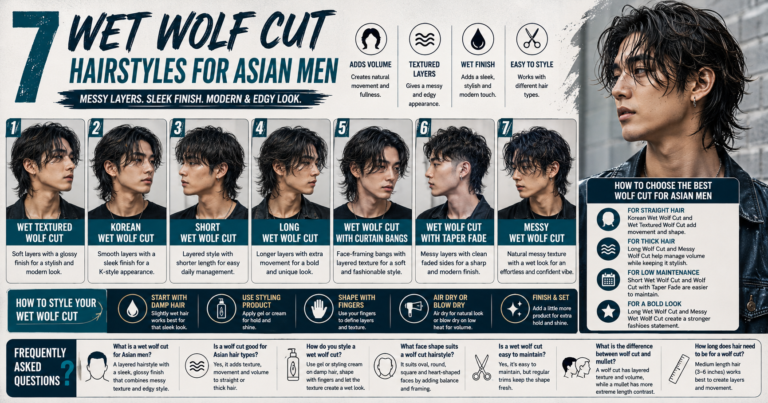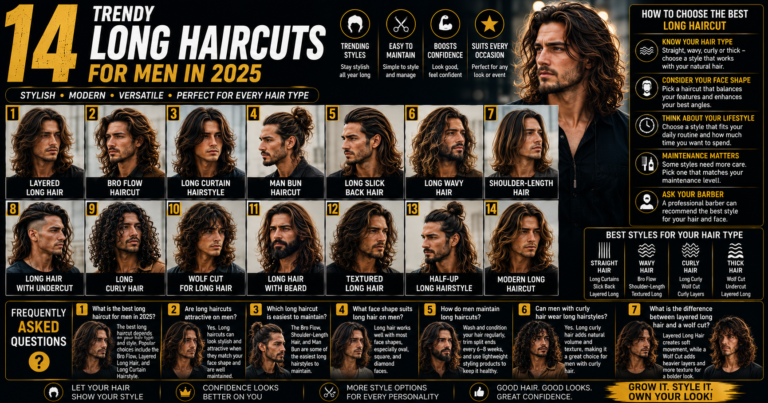
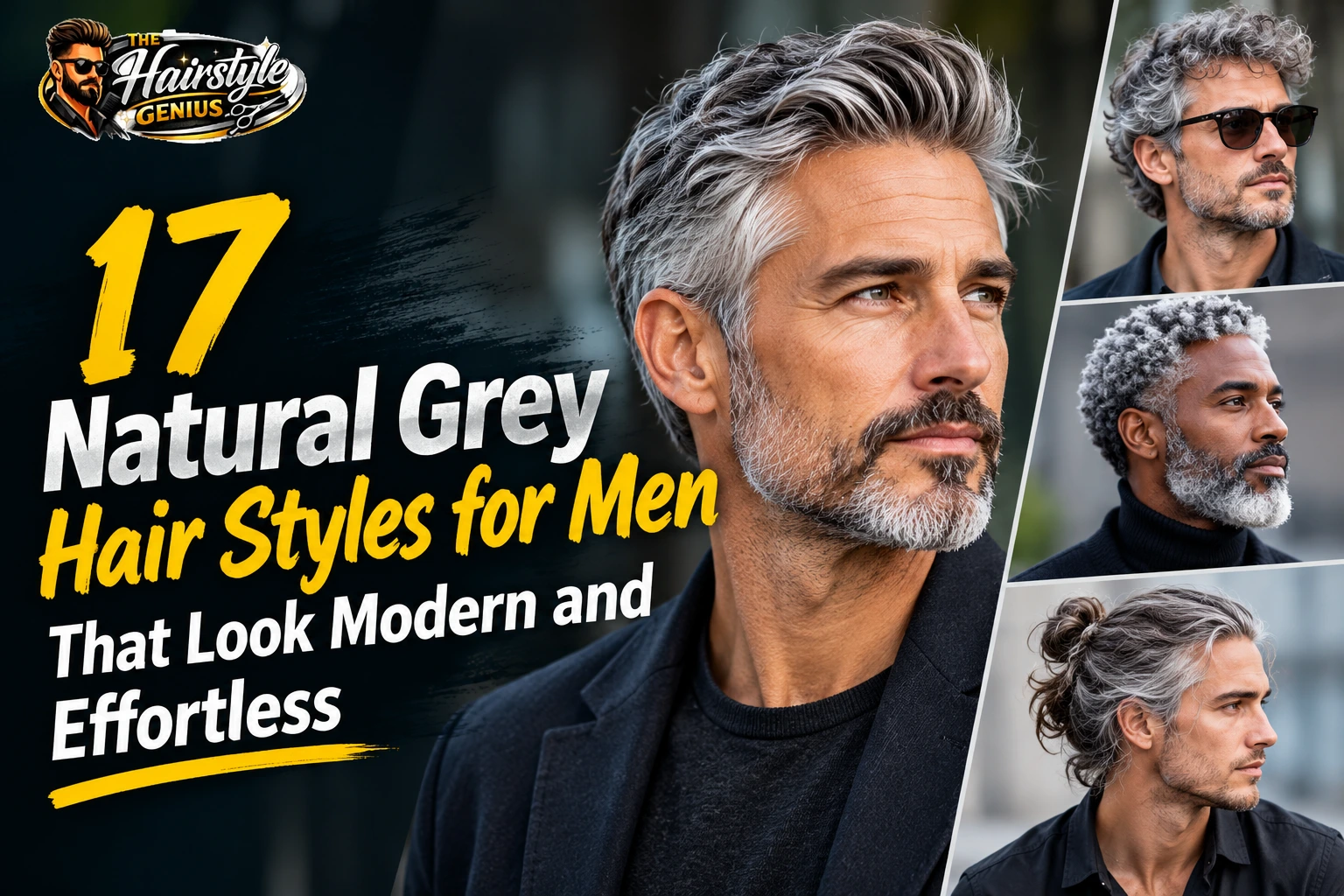
Natural grey hair can look sharp, modern, and full of character when paired with the right haircut. The best natural grey hair styles for men range from clean fades and textured crops to classic side parts, curly Afros, and long silver layers. Your ideal look depends on your hair texture, density, face shape, and how much time you want to spend styling it. You do not need to dye your hair to make grey strands look intentional.
Whether your hair is fully silver or a mix of dark and grey strands, these 17 hairstyle ideas can help you find a cut that works with your natural color and everyday routine.
For an easy everyday style, consider a grey crew cut or textured crop. Choose a fade for sharper definition, a side part for a classic appearance, or longer layers if you want to keep your length. Curly and Afro-textured hair can also look excellent with a shaped natural finish.
1. Classic Grey Crew Cut
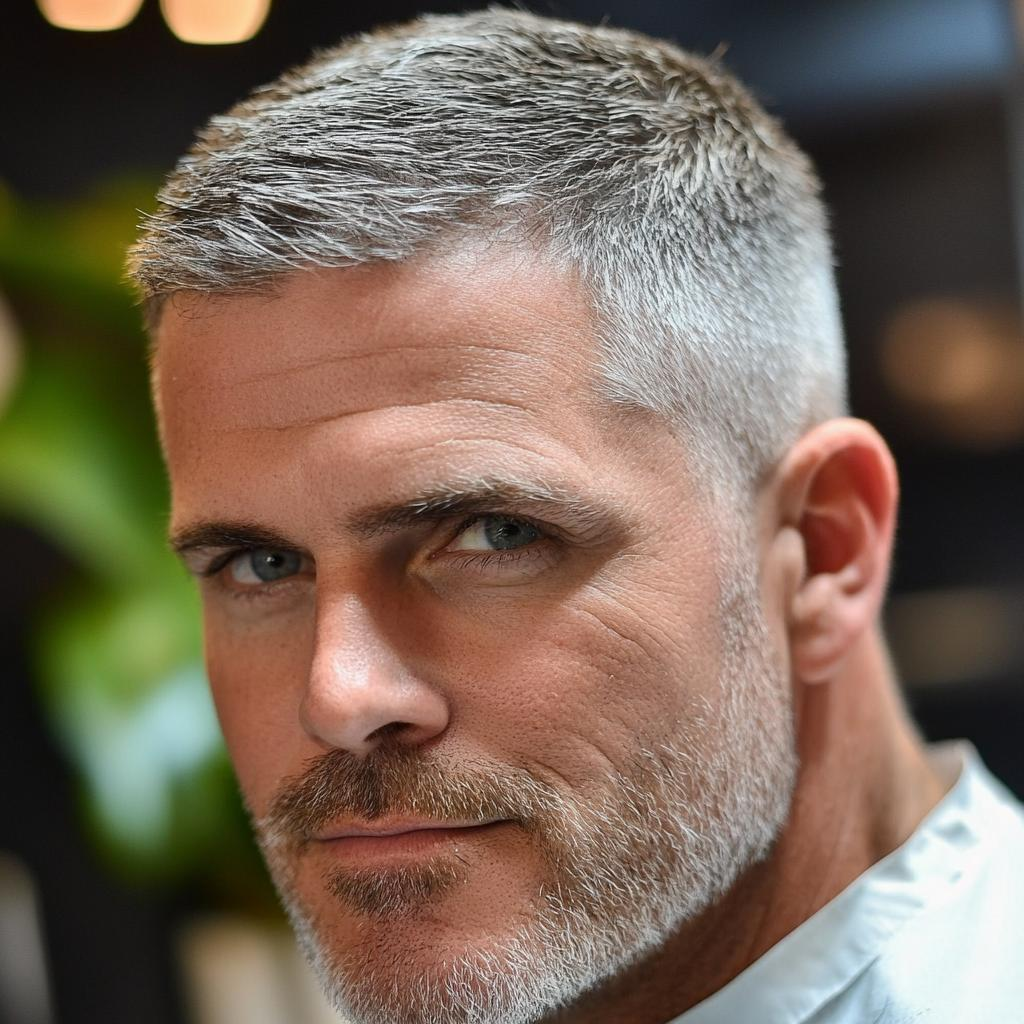
A crew cut is a practical choice for men who want their natural grey hair to look neat without needing much daily styling. The hair stays short at the sides, while the top has enough length to create a little texture. Salt-and-pepper strands add contrast and can make the shape more noticeable.
This style works particularly well for straight, wavy, and moderately thick hair. Ask your barber to keep the top slightly longer if you want some movement rather than a uniform short finish. A small amount of lightweight styling cream is usually enough to control stray hairs.
2. Grey Textured Crop

The textured crop combines a short top with separated, slightly uneven layers. It is a strong option for men who prefer a contemporary haircut without the polished finish of a traditional side part. Natural grey and darker strands can create extra visual contrast between the layers.
Ask your barber for a textured top and a taper that suits your preferred level of contrast. A matte paste can help define the texture without creating excessive shine. If your hair is fine, avoid heavy products that flatten the top.
3. Silver Buzz Cut
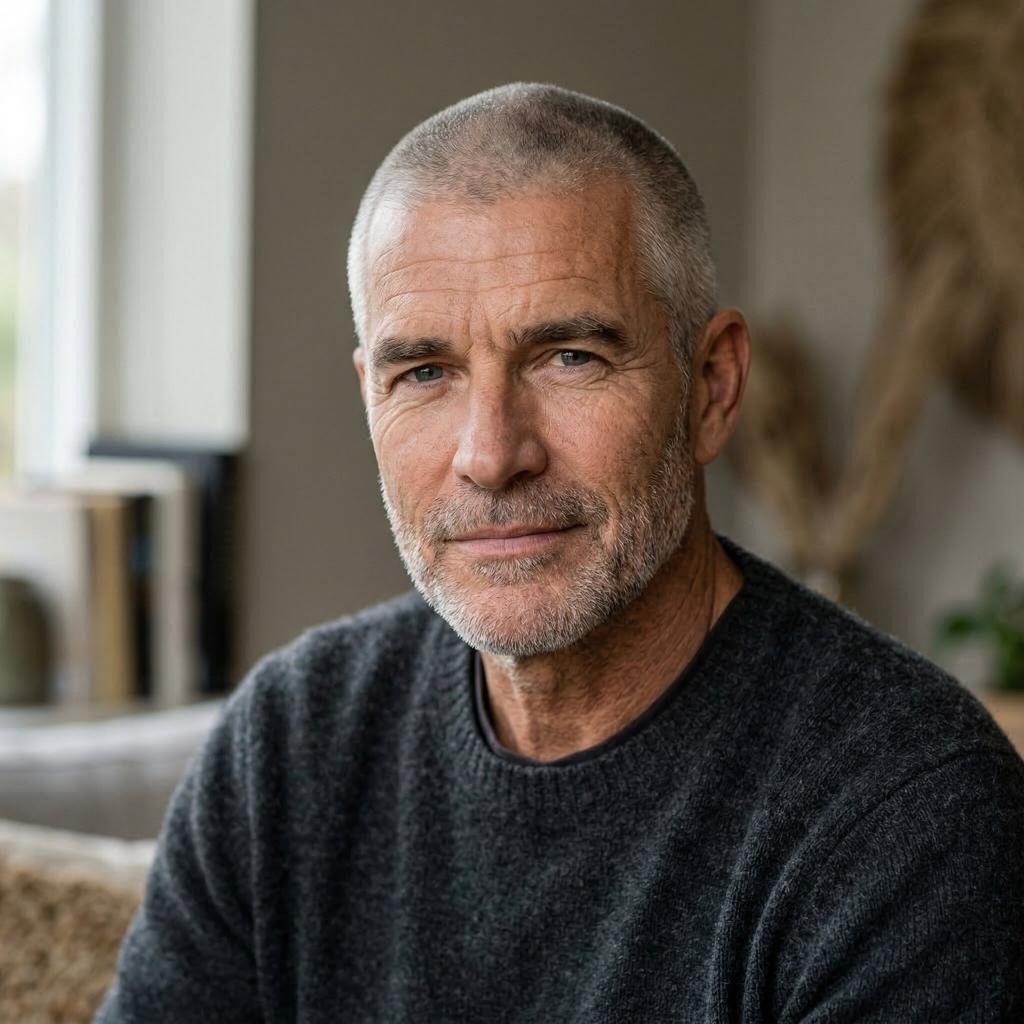
A buzz cut keeps the hair very short and gives natural silver or salt-and-pepper coloring a simple, distinctive appearance. Because there is little length to manage, it can suit men who want a straightforward grooming routine.
The main consideration is that a buzz cut offers limited coverage for the scalp. If your hairline or scalp is something you prefer to keep less visible, a slightly longer crew cut may be a better option. Your barber can recommend a clipper length based on your hair density and the finish you want.
4. Grey Low Fade
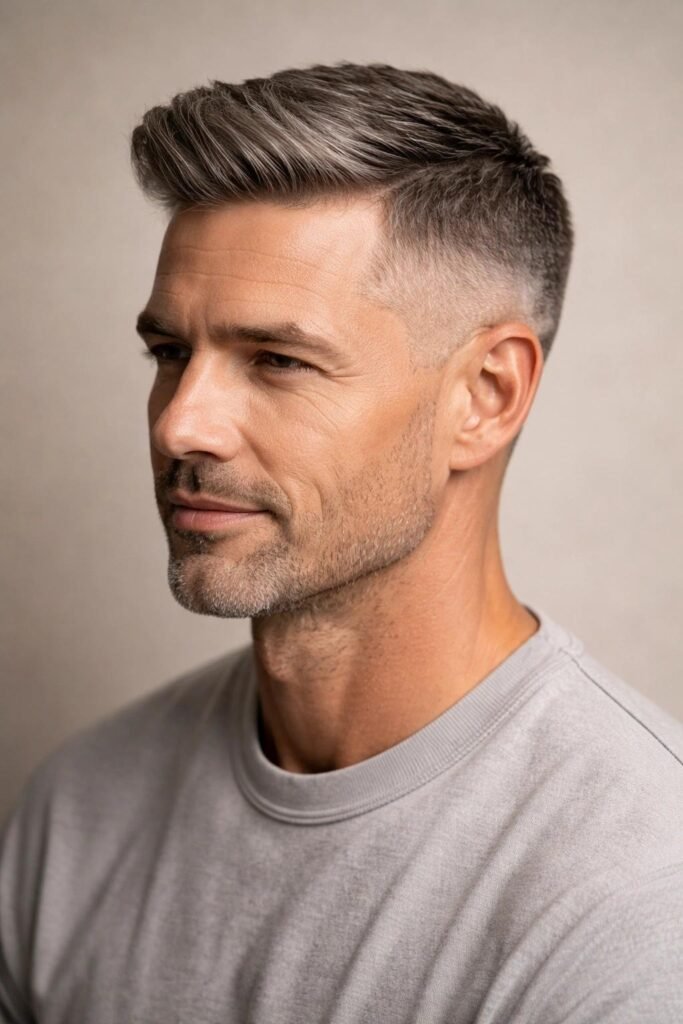
A low fade gradually shortens the hair near the ears and neckline while keeping the transition relatively low on the head. This creates a clean outline without removing too much length from the sides. Grey hair can make the transition between the longer top and shorter sides especially noticeable.
Choose this style if you want a modern haircut that still looks suitable for everyday or professional settings. The top can be brushed forward, parted to the side, or styled with natural texture. A fade needs regular barber visits if you want the edges to remain crisp.
5. Grey Taper with a Natural Top

A taper gradually shortens the hair around the sideburns and neckline without creating the very short contrast associated with some fades. It is an adaptable choice for men who want their grey hair to look tidy but not overly sculpted.
The natural top can be worn with a loose side part, a slight lift at the front, or a relaxed brushed-back finish. This flexibility makes the taper a useful choice for different hair textures. Ask your barber to preserve enough length on top to work with your natural growth pattern.
6. Grey Side-Part Hairstyle

The side part is a timeless option that works with both dark grey and lighter silver hair. A defined part creates structure, while the contrast between different shades of grey adds dimension without requiring artificial highlights.
For a polished appearance, use a comb and a small amount of lightweight styling cream. If you prefer a more relaxed finish, keep the part softer and allow the hair to fall naturally. This style is especially useful for men who want one haircut that can work in both casual and formal settings.
7. Grey Slick Back

A slick back moves the hair away from the forehead, allowing the natural silver or salt-and-pepper tones to remain visible across the top. It creates a more refined appearance than a loose textured cut and can work well for medium-length hair.
The style is easiest to manage when the hair has enough length to stay directed backward. Apply a small amount of styling cream or a suitable pomade, then comb the hair into place. If your hair is fine or tends to look flat, use a lighter product and avoid pressing the roots too tightly against the scalp.
8. Grey Quiff

A quiff adds height and volume at the front while keeping the sides shorter or neatly shaped. On natural grey hair, this creates a clear silhouette that draws attention to the haircut rather than relying on color.
The look is best suited to men whose hair has enough length and hold at the front. Blow-dry the roots upward on a low or moderate heat setting, then use a small amount of styling product to maintain the shape. A softer quiff is often easier to wear daily than a tall, rigid version.
9. Grey Pompadour

The pompadour features a fuller, lifted front that sweeps backward over the top. Grey hair can make the shape visually interesting because lighter and darker strands catch the light differently. It is a more structured choice than a quiff and generally needs more styling time.
Ask your barber to balance the height with the shape of your head and the density of your hair. Use a blow-dryer and a styling product with enough hold to support the front. If your hair is thinning at the crown or front, a lower-volume version may create a more balanced result.
10. Natural Grey Curly Top
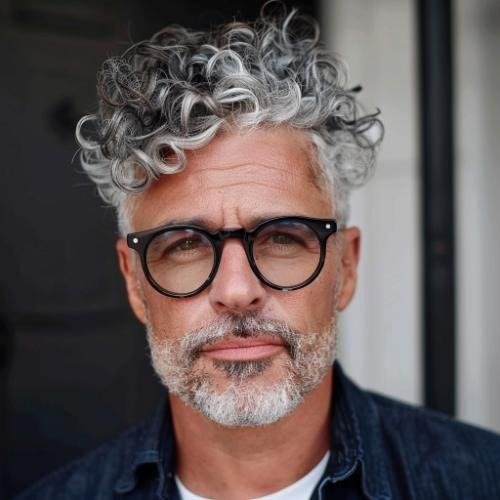
Curly grey hair has its own character, and a cut that follows the natural curl pattern can make it easier to manage. Keeping some length on top allows the curls to form their shape, while shorter sides create a cleaner outline.
Use a lightweight leave-in conditioner or curl cream if your hair needs extra moisture and definition. Avoid brushing dry curls aggressively, as this can increase frizz. Because curl patterns and shrinkage vary, ask your barber to account for how your hair looks when dry rather than judging the length only when wet.
11. Grey Afro with a Shape-Up
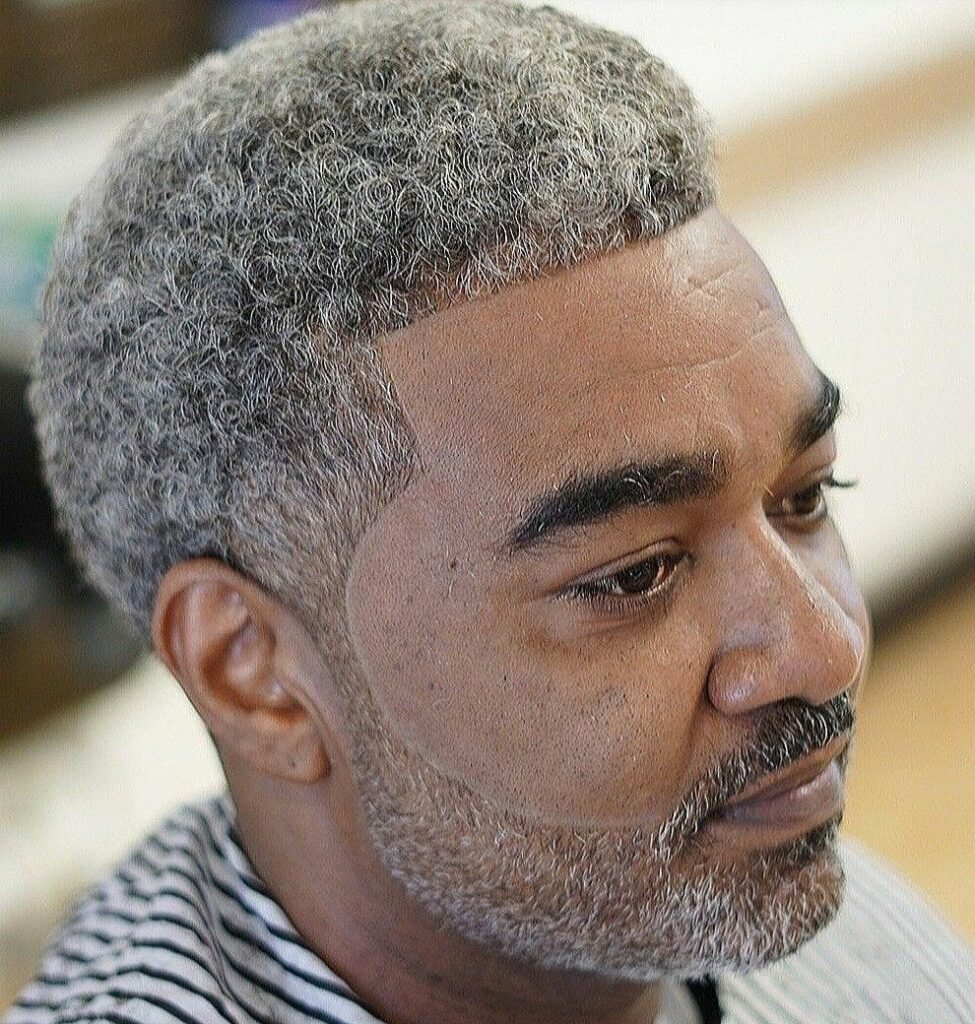
A shaped Afro lets natural texture take center stage while creating a clear, rounded or gently squared silhouette. Grey strands can add visible variation across the curls, giving the haircut depth without needing color treatments.
The shape should be tailored to your hair density, curl pattern, and preferred outline. Moisturizing products can help keep textured hair manageable, while regular shaping maintains the overall form. For more inspiration, explore these Afro-inspired haircuts for men, which cover several ways to work with natural texture.
12. Grey Caesar Cut

The Caesar cut features short hair with a small fringe directed forward. It is a useful option for men who prefer their hair to sit close to the head rather than swept backward. The short, structured shape can work with both evenly grey and mixed salt-and-pepper hair.
Ask for a fringe length that works with your natural hairline and forehead. A subtle taper around the sides can make the haircut feel more current. Styling is usually simple: use a little matte product if needed, or wear the hair naturally after washing and drying.
13. Grey Modern Wolf Cut

A wolf cut combines shorter layers around the crown with longer, more textured sections around the sides and back. It creates movement rather than the uniform outline of a traditional short haircut. Grey and darker strands can emphasize the different layers.
This style suits men who enjoy a less formal appearance and have enough length to support the shape. It can work with straight or wavy hair, although the finished result will differ by texture. Browse these modern wolf cut ideas for men for more layered inspiration, and ask your barber to adapt the cut to your natural hair pattern.
14. Grey Medium-Length Layers

Medium-length layers provide a balance between short haircuts and long styles. They remove some weight where needed and allow the hair to move naturally, which can be useful if your grey hair feels bulky or sits unevenly.
The key is to keep enough weight at the ends for the style to look balanced. Too many layers can make some hair types appear sparse, so discuss your hair density with your stylist before choosing a heavily layered cut. A light styling cream can help define the shape without making the hair look stiff.
15. Long Natural Grey Hair

Long grey hair can make a distinctive statement when the length and ends are maintained well. Wearing it loose allows natural variations in silver, white, and darker strands to remain visible. Soft layers can also help the hair move without losing all its length.
This style is worth considering if your hair has enough density to support longer lengths and you are comfortable with the extra care they require. Use conditioner regularly, detangle gently, and trim split ends when needed. The long haircuts for men guide offers additional ideas for managing length and choosing a suitable shape.
16. Grey Man Bun

A man bun keeps longer hair gathered away from the face while allowing the natural grey color to remain part of the look. It can be worn high, low, or loosely tied, depending on the hair length and the finish you prefer.
Avoid tying the hair so tightly that it causes discomfort or repeated pulling at the hairline. A soft hair tie is a practical choice for everyday wear. If you prefer a relaxed appearance, leave the bun slightly loose and avoid pulling every strand into a perfectly smooth finish.
17. Grey Wavy Bro Flow
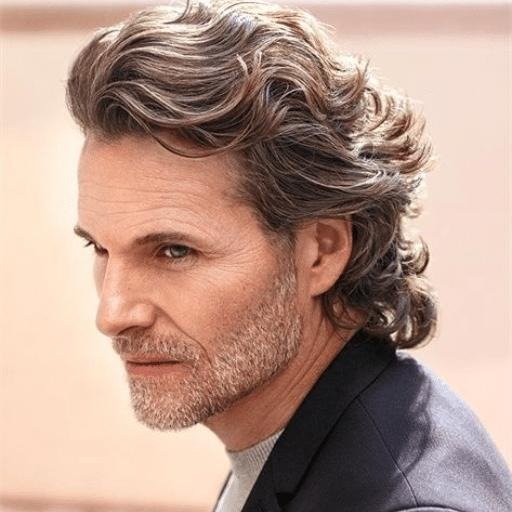
The bro flow allows medium or longer hair to move backward and outward in a relaxed shape. Natural waves give it movement, while the mixture of grey and darker strands creates a soft, dimensional appearance.
This style works best when the hair has enough length to fall naturally rather than needing constant restyling. Ask for light shaping around the sides and ends while preserving the overall flow. A small amount of leave-in conditioner or lightweight cream can help control frizz without removing the natural movement.
How to Choose the Right Natural Grey Hairstyle
The most suitable haircut depends on more than the shade of your hair. Think about how your hair behaves, how much styling you enjoy, and the shape you want to maintain.
| Your preference or hair type | Styles to consider |
| Minimal daily styling | Crew cut, buzz cut, Caesar cut |
| Clean, modern outline | Low fade, taper, shaped Afro |
| Classic or professional appearance | Side part, slick back |
| More height and volume | Quiff, pompadour |
| Natural curls or coils | Curly top, shaped Afro |
| Medium-length texture | Wolf cut, layered hair, bro flow |
| Longer hair | Long grey layers, man bun |
These are starting points, not strict rules. Your hair density, growth pattern, face shape, and personal preferences should guide the final decision.
How to Keep Natural Grey Hair Looking Its Best
Grey hair does not require dye to look well cared for. A consistent routine can help maintain softness, manageability, and a clean finish.
Use a conditioner that suits your hair. If your strands feel dry or rough, a moisturizing conditioner can help improve softness and reduce tangling. Fine hair may need a lighter formula so it does not become weighed down.
Choose styling products carefully. Matte paste works well for textured crops, while lightweight cream can suit medium-length styles. Pomades can provide a smoother finish for side parts and slick backs. Start with a small amount and add more only if needed.
Limit unnecessary heat. Use a moderate or low setting when blow-drying, and apply a suitable heat protectant before hot tools. Excessive heat can leave hair feeling dry and may affect its appearance.
Manage unwanted yellow tones when necessary. Some white or silver hair develops a yellow cast due to product buildup, environmental exposure, or other factors. A purple shampoo may help neutralize unwanted yellow tones, but it is not essential for everyone. Follow product instructions and avoid overusing it if your hair becomes dry.
Keep the haircut in shape. Short fades and precise outlines usually need more frequent barber visits than longer, relaxed styles. Choose a maintenance schedule that fits your preferred finish and budget.
For more inspiration across hair colors and looks, browse the hair color ideas collection on The Hairstyle Genius.
Conclusion
The best natural grey hair styles are the ones that work with your texture, hair density, preferred length, and daily routine. A crew cut or taper offers a clean, practical finish, while a quiff, wolf cut, or long silver layers provides more movement and personality.
You do not need to hide grey strands or follow a single rule about how grey hair should look. Choose a style you can maintain comfortably, take a reference photo to your barber, and adjust the cut to suit your natural hair. The Hairstyle Genius offers more men’s haircut inspiration to help you find a look that feels right for you.
Frequently Asked Questions
1. What are the best natural grey hair styles for men?
Crew cuts, textured crops, low fades, side parts, and slick backs are versatile choices. Men with longer hair can also consider layered styles, a man bun, or a relaxed bro flow.
2. Does grey hair look better short or long?
Neither length is automatically better. Short hair can be easier to maintain, while longer hair offers more styling options. The best choice depends on your density, texture, and preferred routine.
3. How can I make natural grey hair look more stylish?
Start with a haircut that complements your natural growth pattern. Keep the ends shaped, use suitable conditioning products, and choose a styling finish that matches your preferred look.
4. Can men with curly hair wear natural grey hairstyles?
Yes. Curly grey hair can work well in a shaped Afro, curly top, or medium-length layered cut. Choose a shape that accommodates your curl pattern and use suitable moisturizing products.
5. Is a fade a good choice for grey hair?
A fade can create a neat contrast between the sides and top. A low fade provides a subtle transition, while a higher fade creates a bolder look. Your barber can adapt it to your hairline and preferred level of contrast.
6. How do I stop grey hair from looking yellow?
First, consider possible causes such as product buildup and environmental exposure. A purple shampoo may help reduce unwanted yellow tones. Use it according to the label, and maintain a conditioning routine if your hair feels dry.
7. Can I style grey hair without using dye?
Absolutely. A suitable haircut, regular trims, conditioning, and lightweight styling products can help natural grey hair look polished without changing its color.
8. Which natural grey hairstyle is easiest to maintain?
A buzz cut, crew cut, or short Caesar cut generally requires less daily styling than a pompadour or long layered haircut. However, very short styles may require more frequent trims to keep their shape.